
Is Science Immune from Criticism if it Drives Civilizational Progress?
The link in Neil deGrasse Tyson’s ideology between scientism and utilitarianism

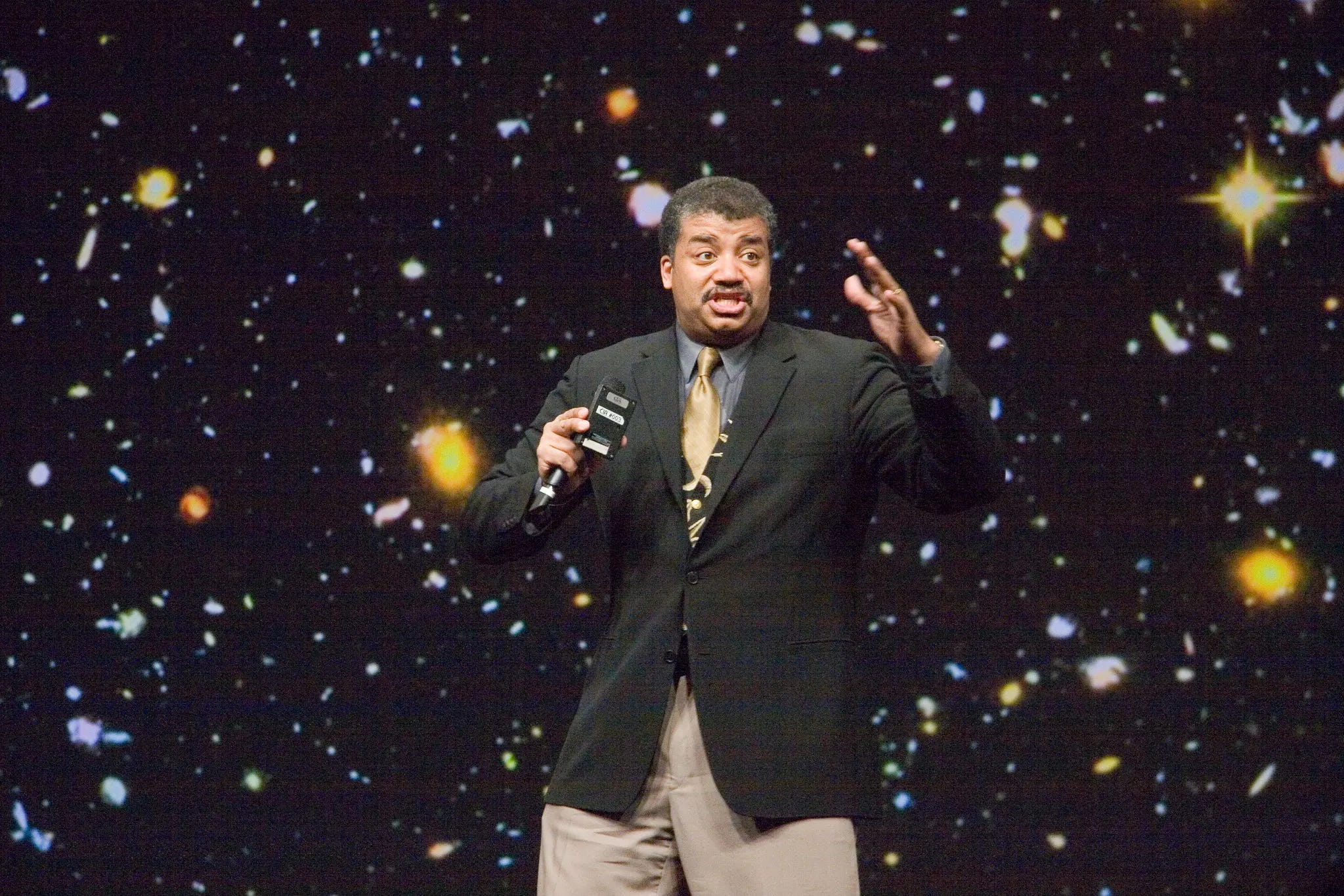
There’s a lot you can learn about science’s utilitarian basis from the scientism of natural scientists like Neil deGrasse Tyson.
Scientism, by the way, is the reverence for science that compels the cheerleaders to condescend to those who practice an unscientific discipline, especially critics of science, such as philosophers.
You’ll notice, in passing, that science itself doesn’t license such an estimation of anything’s importance. Any such evaluation would be independent of a working model of the facts.
Tyson’s dismissal of the philosophy of science
In a YouTube interview with Curt Jaimongal, Tyson couldn’t be clearer in expressing both his scientism and the resulting utilitarian (philosophical) take on science he must presuppose to justify his snooty disdain for the nonsciences (as in the humanities). Jaimongal happens to be a formidable interlocutor who pushes Tyson on these questions because Jaimongal has a background in maths and physics, but he’s also a filmmaker, and his channel “Theories of Everything” explores science’s philosophical implications.
So Jaimongal pushes the Einsteinian, pro-philosophical line against Tyson, that the instrumental view of quantum mechanics, for example, is dubious. This instrumental view is that scientists should “shut up and calculate,” as one physicist famously put it, as opposed to wondering what the equations mean for ontology. And this instrumentalism is dubious, Jaimongal says explicitly, not just on academic philosophical grounds, which the physicist might dismiss, but on scientific ones, assuming scientists are supposed to be interested in uncovering the nature of reality rather than just charting how nature works so we can exploit everything in the furtherance of civilization.
“Physics,” Jaimongal says, “is understanding what reality is.” So Jaimongal points out that a scientific theory is supposed to “tell you what the heck you’re dealing with.” Yet quantum mechanics is just a form of measurement that leaves the metaphysical questions open.
Tyson’s response is that scientists can ignore metaphysics “if what we’re doing still works.” To a philosopher like Jaimongal, Tyson says, a theory should help us understand why things work, “but to me, a practicing scientist who’s building circuit boards based on a complete understanding of how quantum physics works, I don’t need to know that.” Even if a scientist may want to know why things work as they do, Tyson adds, if the search for an answer “distracts me from other progress I will make in this physical universe, and I’m a practicing scientist, I’m going to choose my paths in that way.” In other words, the scientist will focus on calculation and ignore the distracting meta-questions that are posed from the armchair.
Indeed, because of their potential to “distract” scientists, Tyson questions “the utility” of philosophical questions “for the practical-minded scientist.” Moreover, he questions “even the value of those questions.”
Jaimongal seizes on Tyson’s apparent instrumentalism, saying, “So that’s one view, that whatever is useful, let me just build something with it.”
And Tyson leaps to confirm, “Yeah, that’s how I think of physics,” adding, “Physics is matter, motion, and energy, and every way that allows me to predict the future of those systems so that I can exploit it to the benefit of civilization and intellectual pursuit. That’s how I think of physics.”
Tyson’s scientism and utilitarianism
What’s fascinating in this exchange is how Tyson’s utilitarianism — his pragmatic celebration of science’s civilizational benefits that help maximize happiness — emerges as a condition of his scientism. The scientism is apparent from Tyson’s dismissal of philosophical criticisms of science made by any nonscientist, including a mere philosopher of science.
To wit, Jaimongal points out that Einstein, Mach, and John Stewart Bell contributed to or even revolutionized science by thinking philosophically with “thought experiments.” Tyson replies that Mach (and presumably Einstein) did so in the nineteenth century, before the era when physics had fully separated from philosophy. As for Bell, Tyson is quick to point out that he was trained as a scientist, not as a philosopher. Tyson makes the same point about Carlo Rovelli, Lee Smolin, and Abhay Ashtekar, who likewise think “physicists are steeped in philosophy even if they don’t know it,” as Jaimongal puts it. Those three have degrees in physics, Tyson points out, so presumably they’re entitled to criticize science.
The reason this is scientistic is that Tyson doesn’t think there’s any need for symmetry here. You need to study science to be entitled to criticize science, but you needn’t study philosophy to be justified in criticizing philosophy. That’s the prejudice or the double standard in question: science is more important than philosophy because math is harder to learn than a series of armchair speculations. Therefore, scientists can philosophize freely, if only implicitly, even if they have no formal background in philosophy, whereas if your criticisms of science aren’t based on extensive knowledge of science, your criticisms can be dismissed.
Tyson doesn’t view this asymmetry as a problem because he misses the force of Jaimongal’s criticism of the positivistic implications of Tyson’s utilitarianism. In response to Tyson’s interest in civilizational progress, Jaimongal says, “There’s a value there, which isn’t derivable from the physical facts.” Tyson doesn’t understand the point when he asks, “What do you mean ‘a value’?” and he confesses, “I just like it,” meaning he just likes how science empowers civilization. Jaimongal clarifies, saying Tyson likes this progress, “Because you want to do something that’s good, something useful.”
At that point, Tyson thinks the problem is just with the word “useful,” a word he says he didn’t use in the interview (although he did, in effect, when he spoke of science’s “utility”).
In any case, the problem, rather, is the fact/value dichotomy, together with the scientistic presumption that expertise in explaining the natural facts provides some authority to pontificate about what should be done about them. Art, religion, and philosophy enter the picture in exploring and reasoning about questions of value, but because Tyson is a positivist culture warrior, he thinks that the humanities carry little weight, that science is the all-important institution.
And the reason for science’s cultural importance, Tyson implies, is indeed its unsurpassed utility, its empowering of society with technological applications of scientific models.
Tyson’s ideology
Here, then, are the links in the chain of Tyson’s ideology:
Neoliberalism: civilizational progress is good (especially the modern, Western, liberal kind).
Utilitarianism or pragmatism: science is the engine that powers that progress.
Scientism: anything that hinders that progress, such as ill-informed, speculative philosophical criticism of science, is bad and should be dismissed.
Jaimongal’s point, which got buried in the discussion, is just the typical objection to positivism: in ranking science so highly, the scientistic dogmatist presupposes a philosophy, which means this partisan can’t dismiss philosophy after all, not without undermining the praise for science.
Specifically, there’s no strictly scientific defense of the first link, which is Tyson’s implicit neoliberalism or full-throated defense of modern, free-thinking cultures. He’s entitled to that assessment, of course, but in justifying it, he’d find himself resorting to philosophy or the other humanities like history, or soft sciences like economics.
Tyson must know this since he says in the interview that he has no problem with philosophers who don’t distract scientists, such as political philosophers, ethicists, and philosophers of mind (speculators on the nature of consciousness). That’s what Tyson says to be polite, but what his utilitarian view of science implies is that unscientific disciplines are relatively useless and therefore of negligible value.
Jaimongal’s criticism, though, is stronger than that. His point isn’t just that science’s social role is based on an overarching philosophy of life. On top of that, in citing Smolin and the others, he says that the concepts of physics are implicitly philosophical and metaphysical.
Workability and the existential driver of civilizational progress
This is where Tyson’s utilitarian construal of science is so crucial. Tyson wants science to have nothing to do with philosophy (let alone religion). He wants these disciplines to be separate. Why? Because of his sheer scientism, that is, his all-consuming love of science (or his social role as a science popularizer), which leaves no affection or respect left over for any other discipline. He values science above all other intellectual pursuits, so he doesn’t want science to be contaminated by the limitations of lesser fields.
Where the hard sciences excel is in their mathematical precision and rigor. Physics is more exact than philosophy since physicists quantify and measure things, whereas philosophical questions are more inherently open, which is to say they’re not so well-formed.
But modelling how something “works” isn’t the same as understanding what the thing is. You can track patterns that you perceive, while understanding their underlying causes in the most naïve terms. That’s just how early humans thrived in the wilderness when they learned how to cope with their environment, hunting prey, seeking shelter, predicting weather patterns, and so on, even though they interpreted those patterns as arising from a host of animated spirits. The same set of patterns can be modelled in various ways, based on very different cultural presumptions and plans.
In scientism’s heyday in the nineteenth and early twentieth centuries, positivists might have wanted to assimilate such variability of models to mere “notational” differences. You can do science, for instance, while speaking English, German, or Swahili, but the facts and the substance of the models would be the same. Yet Jaimongal was suggesting that the differences are bigger since they’re more conceptual.
As I’ve argued elsewhere, one such conceptual presupposition would be found in the scientific practice of objectification itself. As Tyson makes clear, this method of analyzing and quantifying phenomena is supposed to be progressive for civilization. Whether that’s so in the long run, or whether this objectification will end up destroying civilization, remains to be seen. But the point here is that the civilizational plans might impact the scientific conceptions that are supposed to be purely objective.
For civilization to progress, we need nature to be something that could be suitably enslaved. Nature must have no rights or inherent value, so that we can use natural patterns and materials as raw ingredients in the artificial constructs that we prefer. To what extent, then, do scientists import the implicit values and metaphors of this pragmatism — of anthropocentric humanism, Francis Bacon’s misogynistic view of nature as a feminine presence that should be dominated, or neoliberal consumerism as dictated by powerful corporations — in their technical models of how natural processes work?
Indeed, what exactly is nature’s workability, without the Aristotelian backdrop of teleology, which modern science ended up rejecting? This workability turns out to be subjective since it refers essentially to living things like us who put natural patterns to work. If a scientific theory succeeds in decoding how nature “works,” that means the theory is useful to civilization. Without civilization, nothing in nature works at all. The natural patterns would remain, but because no one would be making use of them, they’d be doing no work. Workability is a social category, not a natural one.
I suspect, though, that starry-eyed scientists like Neil deGrasse Tyson, who like to adopt a cosmic perspective, would be inclined to interpret those patterns in something like the pantheistic terms I’ve explored elsewhere. Nature itself is evidently doing work, almost as Aristotle explained; it’s just that Aristotle resorted to clumsy comparisons between natural aggregates and human constructs. Nature is building things, too, namely galaxies of solar systems, levels of molecular order, stages of universal evolution, and so on. This work is impersonal, amoral, mindless (godless), and therefore monstrous, even zombie-like, from the vantage point of our mammalian intuitions.
Evidently, this is the existential motivator of civilizational progress: we want to advance civilization to sustain an artificial alternative to the natural order because the latter is absurd and horrific. Spelling out this existential pantheism would be a job for scientists, philosophers, historians, and even theologians, as well as artists and practically everyone else. But positivistic or scientistic condescension like Tyson’s blocks the kind of collaborations that seem necessary to understanding science’s role in nature.
Haven't read the piece yet, but "Science immune From Criticism" ? You do know that science is built upon criticism, disproving things, etc? Why would science be immune from criticism in society if it is larder with criticsm by practitioners. Okay, I will go read your piece now.
http://beezone.com/current/priesthoodofscience.html
http://www.dabase.org/asana-science.htm The Transmission of Doubt
http://beezone.com/current/psychosisdoubt.html The Psychosis of Doubt
http://www.adidam.org/teaching/gnosticon/religion-science